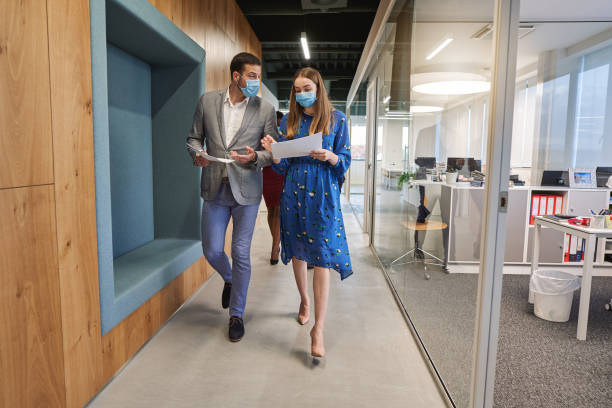
People often treat office interiors as an afterthought, something to sort out after the “real” decisions are made. But the truth is, the way an office looks and functions has a direct impact on how employees feel, how clients perceive your business, and how smoothly everything runs on a daily basis. Investing in proper office interior design isn’t about making things pretty for the sake of it; it’s about creating an environment where your team can genuinely do their best work.
Start with the basics: lighting, layout, and furniture selection. These three elements alone can transform a dull, stuffy workspace into something that people actually look forward to walking into. Natural light has a well-documented effect on mood and alertness; offices that bring in more of it tend to have healthier, happier employees. Layout determines how people move through a space and whether collaboration feels natural or forced. And furniture, from the chairs your team sits in to the conference table where decisions get made, sets the tone for the entire experience.
According to the Bureau of Labor Statistics interior design overview, the role of a professional interior designer is to make indoor spaces functional, safe, and visually cohesive, all three of which matter enormously in a commercial office setting. When a design achieves all of those goals at once, the result is a workspace that supports the people in it rather than working against them.
Furniture Is the Foundation of Any Interior
No matter how well-chosen your paint colors are or how good the lighting feels, the furniture is what your team actually uses all day long. It’s where they sit, work, meet, and take a breather. Choosing furniture that suits both the aesthetic and the functional needs of the space is one of the most important design decisions you’ll make. Poorly chosen furniture can make even a beautiful office feel uncomfortable and inefficient, while the right pieces can make an ordinary space feel purposeful and professional.
For open-plan offices, modular furniture that can be rearranged as teams grow and change is a smart investment. For private offices and meeting rooms, pieces that project confidence and quality communicate something important to everyone who uses them. Getting this right is a process that benefits from expertise rather than guesswork.
First Impressions Stick Around Longer Than You Think
Clients and job candidates walk into your office and form an opinion within the first few seconds — and it’s mostly based on how the space looks and feels. A well-designed interior signals that your organization is professional, detail-oriented, and takes its culture seriously. A cluttered or generic interior signals the opposite, even if your actual work is excellent.
The good news is that thoughtful interior design doesn’t require an unlimited budget. It requires the right approach — one that prioritizes function alongside form and makes deliberate choices about what goes where and why. Practical office environment safety tips are a useful reference here, since good interior design also accounts for clear walkways, emergency access, and ergonomic setups that keep employees safe as well as comfortable.
Whether you’re starting from scratch or giving an existing office a much-needed refresh, approaching the project with a proper interior design plan means you end up with a space that works not just one that looks like it should.