The landscape of video advertising has undergone profound changes in recent years, driven by the explosive growth of digital platforms and the demand for content that captures attention in seconds. Traditionally, creative testing involved labor-intensive processes: producing a handful of video variations, launching them in controlled campaigns, and analyzing performance metrics over weeks or months. This approach often limited innovation due to high costs and slow feedback loops. Today, artificial intelligence is reshaping this domain, enabling marketers to generate, test, and optimize video creatives at unprecedented speed and scale. From predictive modeling to automated variation creation, AI video creation is not just enhancing efficiency—it is redefining what constitutes effective creative strategy in video.
Overcoming Limitations of Conventional Testing Methods
Video creative testing has long relied on A/B testing frameworks, where marketers compare a limited set of ads to identify winners based on engagement, conversion rates, or brand recall. These methods, while reliable, come with inherent constraints. Producing high-quality video content requires significant resources, including scripting, filming, editing, and post-production. Testing only a few variants at a time means opportunities for breakthrough ideas are often missed, and campaigns can launch with suboptimal creatives.
Moreover, real-world performance data takes time to accumulate, delaying insights and adjustments. In competitive environments like social media feeds or streaming platforms, where user attention spans are fleeting, this lag can result in wasted ad spend. AI addresses these pain points by shifting testing from reactive, post-launch analysis to proactive, pre-launch prediction and rapid iteration. This transition marks a fundamental evolution, allowing teams to explore broader creative possibilities without proportional increases in time or budget.
Accelerating Creative Generation Through AI
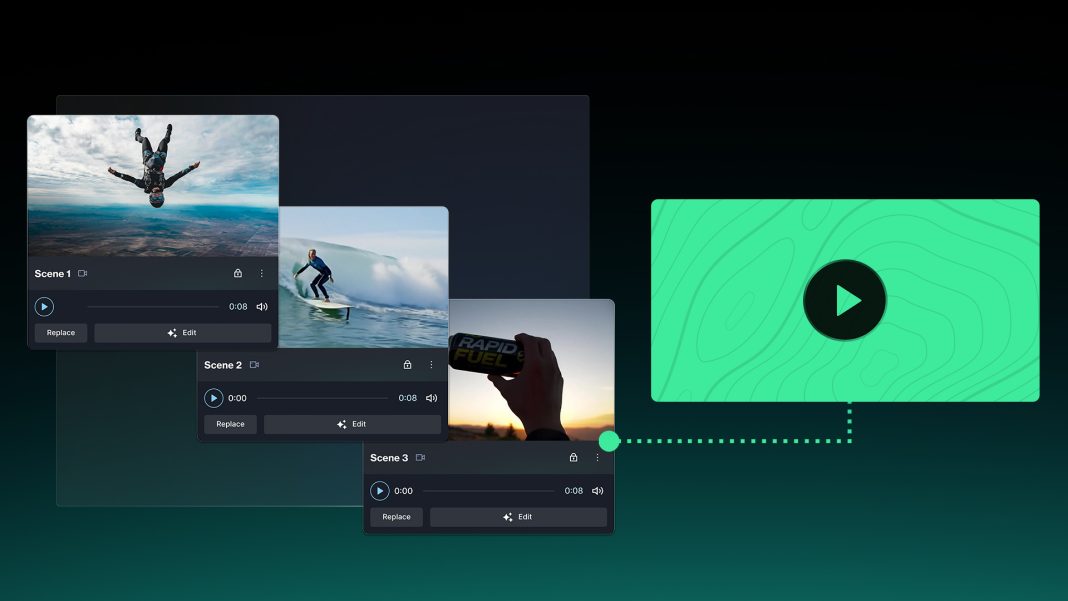
One of the most impactful ways AI is transforming video creative testing is through automated generation of diverse ad variants. Advanced generative models can now produce complete video ads from simple inputs, such as product images, text descriptions, or existing assets. These tools create multiple versions varying in length, style, pacing, voiceover, music, and visual effects, providing a vast pool for testing that would be impractical manually.
For instance, platforms leverage machine learning to transform static product pages into dynamic video ads, complete with scripted narratives and optimized thumbnails. This capability enables marketers to test dozens or hundreds of iterations simultaneously, identifying high-potential concepts early. In parallel, major advertising ecosystems have integrated similar features. On one hand, AI-driven systems automatically enhance uploaded videos by adjusting formats for different placements, animating images into short clips, or generating personalized overlays. On the other, performance-oriented campaigns use AI to assemble and generate videos from provided assets, ensuring coverage across channels like search, display, and video networks.
This generative approach democratizes high-volume testing, particularly for smaller teams that previously lacked the resources for extensive production.
Enhancing Prediction with Advanced Analytics
Beyond generation, AI excels at predictive testing, evaluating creatives before they go live. Machine learning algorithms analyze elements such as visuals, audio cues, text overlays, and emotional tone to forecast audience response. By drawing on vast datasets of historical ad performance, these systems assign scores indicating potential success metrics, including click-through rates, view completion, and emotional engagement.
Specialized tools employ computer vision and natural language processing to break down videos frame by frame, assessing factors like facial expressions in user-generated content styles or the impact of color schemes on viewer retention. This pre-testing reduces reliance on live experiments, minimizing risks associated with underperforming ads. When combined with human oversight, AI predictions achieve high accuracy, helping refine creatives iteratively.
In practice, this means marketers can prioritize top-scoring variants for launch while discarding or revising others, streamlining the entire testing pipeline.
Integration Within Leading Advertising Platforms
Major players in digital advertising have embedded AI deeply into their ecosystems, making advanced creative testing accessible at scale. Meta’s Advantage+ suite, for example, uses AI to optimize and vary creatives in real time, including video expansions that adapt content to fit various aspect ratios and platforms. Features like image animation turn static assets into engaging motion videos, while personalization engines tailor elements based on user signals.
Similarly, Google’s Performance Max campaigns harness AI to auto-generate video ads, combining user-provided assets with generative capabilities to create professional-quality content in multiple orientations. These platform-native tools not only handle testing but also dynamically allocate budget toward winning creatives, adjusting on the fly as performance data streams in.
Such integrations represent a trend toward end-to-end AI orchestration, where testing is no longer a discrete step but an ongoing, automated process embedded in campaign management.
Delivering Measurable Gains for Brands
The adoption of AI in video creative testing yields tangible benefits across efficiency, performance, and creativity. Campaigns launch faster because pre-launch predictions shorten development cycles. Marketers achieve higher returns on investment by focusing spend on proven variants and avoiding flops. Data-driven insights reveal subtle patterns—such as the superiority of certain narrative structures or emotional triggers—that might elude human intuition.
Furthermore, AI enables hyper-personalization, where creatives adapt to individual viewer preferences, boosting relevance and engagement. Brands report improved metrics, from increased conversion rates to stronger brand affinity, as AI uncovers optimal combinations that resonate broadly yet feel tailored.
This shift also fosters innovation, encouraging experimentation with bold ideas that traditional constraints might suppress.
Addressing Hurdles in Implementation
Despite its advantages, AI-driven creative testing is not without challenges. Concerns around algorithmic bias persist, where training data might favor certain demographics or styles, potentially limiting diversity in outputs. Over-reliance on AI could stifle original human creativity, producing homogenized content that blends into the noise.
Data privacy remains a critical consideration, especially with personalization relying on user information. Additionally, the quality of AI-generated videos continues to evolve; while impressive, outputs sometimes require human refinement to meet brand standards.
Successful adoption demands a balanced approach, combining AI efficiencies with creative expertise and ethical oversight.
Evolving Trends Shaping Tomorrow’s Landscape
As AI technology advances, the future of video creative testing points toward even greater automation and sophistication. Emerging trends include fully generative workflows, where entire campaigns—from ideation to deployment—are AI-orchestrated. Predictive models will incorporate real-time cultural and trending data for more contextual relevance.
Hyper-personalized video at scale, powered by improved generative capabilities, could become standard, with ads morphing dynamically for each viewer. Integration of multimodal AI, blending text, image, and video seamlessly, will further blur lines between creation and testing.
Industry forecasts suggest that by the end of the decade, the majority of video ads will involve AI at multiple stages, fundamentally altering marketing roles. Marketers who embrace these tools strategically will gain a competitive edge, turning creative testing into a proactive engine for growth rather than a reactive checkpoint.