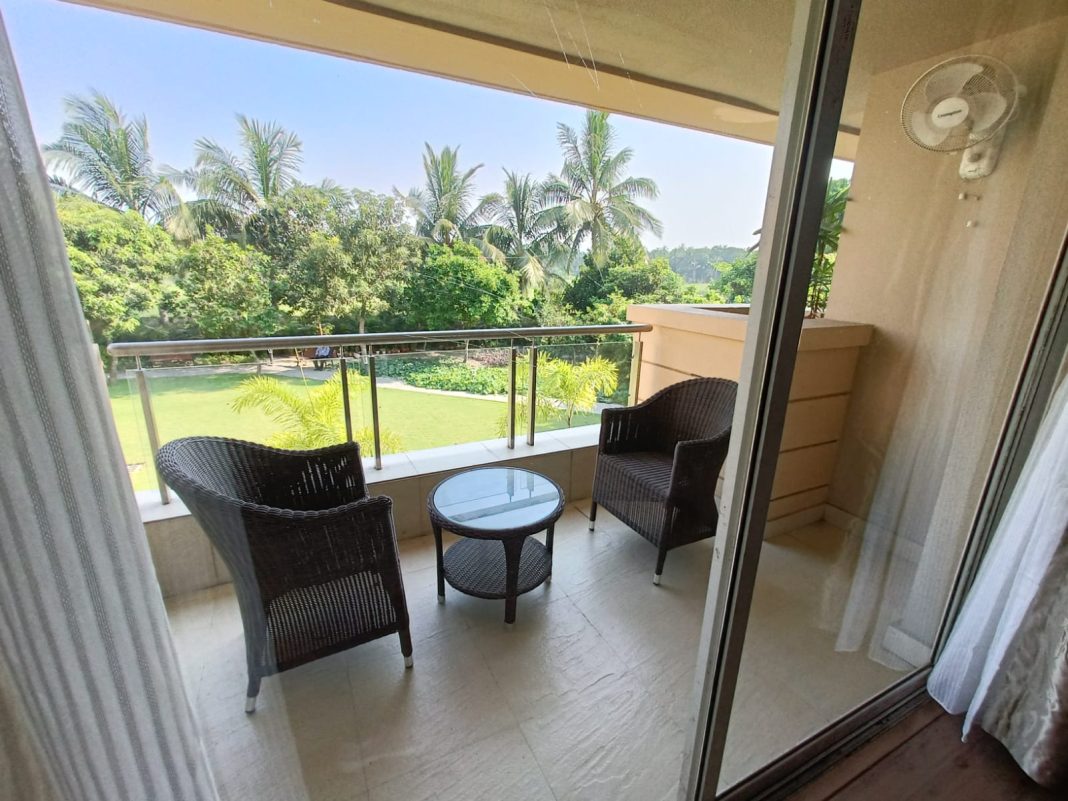
Evaluating an assisted living facility in Kolkata often begins with recognising that standard domestic settings hide specific hazards for adults over 70—including raised door sills, slippery bathroom surfaces, inadequate night lighting, and an absence of 24/7 clinical oversight. While home modifications like grab rails help, they cannot overcome structural building constraints or replicate round-the-clock medical monitoring. Jagriti Dham (near Joka and Amtala) resolves these limitations through purpose-built IGBC-certified barrier-free architecture; 24/7 on-site geriatric care; professional daily medication audits; and a vibrant Bengali peer community that prevents isolation—providing a level of physical safety, daily purpose, and health monitoring that domestic adaptations simply cannot match.
The question ‘is our home safe for a senior parent?’ is one that most families answer from familiarity rather than assessment — ‘we have lived here for thirty years; it is perfectly safe.’ But the home that is perfectly safe for a 50-year-old accumulates specific hazards for a 75-year-old whose balance is less reliable, whose recovery from a fall is slower, whose overnight health needs are more complex, and whose social isolation is growing. More Kolkata families are asking the question honestly — and finding that assisted living facilities in Kolkata at Jagriti Dham’s certified standard provide the answer that domestic adaptation cannot. This guide explains what makes a home unsafe for seniors — and why the purpose-built assisted living community near Joka resolves every limitation the domestic setting creates.
The Seven Home Safety Hazards That Indian Domestic Settings Create for Elderly Adults — and That Most Families Do Not See Until After a Fall
A geriatric home safety assessment of a typical Indian domestic property consistently identifies seven specific hazards that families did not recognise as hazards until they were pointed out or until a fall made them visible:
- Steps and level changes throughout the building: The step at the bathroom entrance, the raised threshold between rooms, the staircase without continuous handrails — each is a fall risk that the elder navigates daily with decreasing safety as balance and reaction time diminish. Assisted living for seniors at a purpose-built assisted elderly living facility eliminates these at the architectural level.
- Bathroom surfaces without grip:. The smooth tiled bathroom floor, the bathtub that requires stepping over a rim, the toilet without side rails — the bathroom is the highest fall-risk room in the Indian domestic home for adults over 70.
- Inadequate overnight lighting: The elder who wakes at night to use the bathroom navigates a dark corridor whose light switches are not positioned for safe half-awake movement. Inadequate overnight lighting is a direct fall-risk factor that domestic settings almost universally underestimate.
- Furniture that obstructs safe movement: The coffee table, the low stool, and the chair placed against a wall that a reaching elder uses as a balance point – domestic furniture is not arranged for safe elder movement.
- No professional overnight monitoring: The most serious safety gap in the domestic setting is not physical but clinical: the absence of anyone who will detect a health event that occurs during the night before its consequences become severe.
- Social isolation that reduces the elder’s safety behaviour: Isolated elders take more risks — doing things they should not do alone, not asking for help they need, not reporting health changes promptly — because the social environment that modulates these decisions is absent.
- Medication management without professional oversight: The elder managing multiple medications without daily professional review misses the interaction effects, the timing errors, and the dose adjustments that health changes require.
How Assisted Living Facilities in Kolkata at Jagriti Dham’s Standard Address Every Home Safety Hazard by Design
Every one of the seven domestic safety hazards is addressed at Jagriti Dham by a specific design or care provision that the domestic setting cannot replicate through adaptation:
- Senior-friendly architecture: The IGBC-certified building at Jagriti Dham near Joka is designed from the foundation as a step-free environment — wide corridors, level thresholds, and continuous support surfaces that enable confident independent movement for assisted living for elderly people at any mobility level.
- Geriatric-appropriate bathroom design: Non-slip surfaces, seated shower provision, toilet side rails, and grab rails throughout the bathroom spaces — not retrofitted but designed in from the building’s construction.
- Certified overnight lighting standards: Adequate lighting in all corridors and rooms at all hours — a building certification requirement, not a resident preference option.
- Community for seniors that maintains safety behaviour: The peer community at Jagriti Dham creates the social environment in which elders naturally ask for help, report health changes promptly, and do not take the unnecessary risks that isolation produces.
- 24-hour geriatric-trained staff: Overnight health events at Jagriti Dham are detected and responded to by professional care staff — the most significant safety advantage of the elderly assisted living facility over any domestic arrangement.
- Daily professional medication management: The geriatric care home daily medication review at Jagriti Dham ensures that timing, dosage, and interaction management are professionally maintained throughout the resident’s care.
Why Is Purpose-Built Care Safer Than Modifying Your Home?
Families who recognise the home safety gaps described above often attempt domestic adaptation as the first response — installing grab rails, removing trip hazards, or arranging a home care worker. These adaptations reduce risk but do not eliminate it, for three structural reasons:
- Domestic construction limits: A home built without geriatric design standards cannot be fully retrofitted to meet them. The step at the bathroom entrance requires structural modification that most Indian domestic properties cannot accommodate. The corridor width that allows safe mobility aid use requires the home to have been built with that width. Assisted living for elderly people in a purpose-built facility eliminates these constraints because they were designed out at the construction stage.
- Overnight monitoring cannot be replicated at home: A 24-hour professional care team present in the building cannot be replaced by a home care worker whose hours end at 8pm and whose scope is limited to daytime assistance.
- Social safety cannot be engineered in isolation: The peer community that produces the social safety behaviour of a genuine elderly assisted living facility — the willingness to ask for help, report symptoms, and not take risks alone — cannot be created for a single elder at home, regardless of the quality of the home care provided.
How Can You Evaluate Safety Architecture During a Tour of Jagriti Dham?
The safety architecture at Jagriti Dham is directly observable during a scheduled visit. Three targeted observations confirm the safety standard:
- Walk the building with the seven domestic hazards in mind: A brief campus tour makes the contrast with a typical home instantly clear—from smooth level transitions, wide corridors, and unbroken handrails to specialised bathroom design and certified nighttime lighting.
- Ask about the overnight monitoring and escalation protocol: The specific answer about what happens if a resident has a health event at 3 am — who responds, how quickly, and what the escalation pathway is confirms that the overnight safety provision is genuine and operational.
- Ask a current resident what safety concern from home they no longer have at Jagriti Dham: The specific and relieved answer — the bathroom, the overnight worry, the medication management — confirms that the safety benefits are real, daily, and personally meaningful to the people experiencing them.
Why Choose Purpose-Built Assisted Living Over Home Modifications?
The honest answer to ‘Is your home truly safe for a senior parent?’ is for most Indian families, no — not to the standard that geriatric safety requires and that a purpose-built certified facility provides. The growing number of Kolkata families choosing assisted living facilities in Kolkata reflects this honest assessment — and the recognition that Jagriti Dham by Infinity Group near Joka and Amtala provides the architecture, the care, and the community that makes every domestic safety gap a permanent past concern rather than an ongoing daily risk. The scheduled visit that walks the building, asks the three safety questions, and speaks with a current resident is the most powerful way to confirm that this is the right choice.
Frequently Asked Questions
Q1. For families who have already installed grab rails and removed trip hazards at home, is that sufficient to make the domestic setting genuinely safe for an assisted living seniors standard?
Domestic adaptation through grab rails and hazard removal improves safety significantly – but does not produce the geriatric safety standard for three reasons that adaptation cannot address. First, the overnight monitoring gap: no physical adaptation replaces a 24-hour professional care presence that detects and responds to overnight health events. Second, the social isolation safety gap: the peer community that produces safe elder behaviour cannot be created in a single-person domestic setting. Third, the clinical monitoring gap: daily geriatric health assessment, medication review, and early health change detection require a professional care team that domestic adaptation does not include. Adaptation reduces physical hazards; the full geriatric safety standard requires a purpose-built community.
Q2. How soon after a fall or health event should families begin the scheduled visit process for assisted living facilities in Kolkata?
The scheduled visit process for assisted living facilities in Kolkata is most productive when begun before a fall or health event makes the decision urgent — because the elder who visits Jagriti Dham before a crisis is visiting from a position of curiosity and choice rather than necessity and urgency. However, for families who are beginning the process following a health event, the most important step is to book the scheduled visit before the elder returns to the domestic setting that produced the event—because the window between a health event and the elder’s return to the familiar home is the moment when the domestic safety limitations are most clearly visible to both the elder and the family. Jagriti Dham near Joka is available for scheduled visits throughout the week.
Concerned about a parent’s safety at home near Joka, Amtala?
Book a scheduled visit to Jagriti Dham — walk the safety architecture, ask the three monitoring questions, and compare it with the domestic setting.
About Jagriti Dham
This guide was curated by the Jagriti Dham team (www.jagritidham.com). Jagriti Dham is Kolkata’s most luxurious senior citizen home and Eastern India’s first Indian Green Building Council-certified green senior living facility, situated near Joka and Amtala in South Kolkata. A project of the Infinity Group, Jagriti Dham is envisioned as a centre of excellence, promoting active ageing and aiming to build an age-integrated society – where elders can live independently while receiving the best possible care. Unlike other old age homes, Jagriti Dham’s vision extends beyond the walls, giving elders a hassle-free life in a peaceful, like-minded community.
Follow us: Facebook | YouTube | Google My Business | LinkedIn | Instagram